
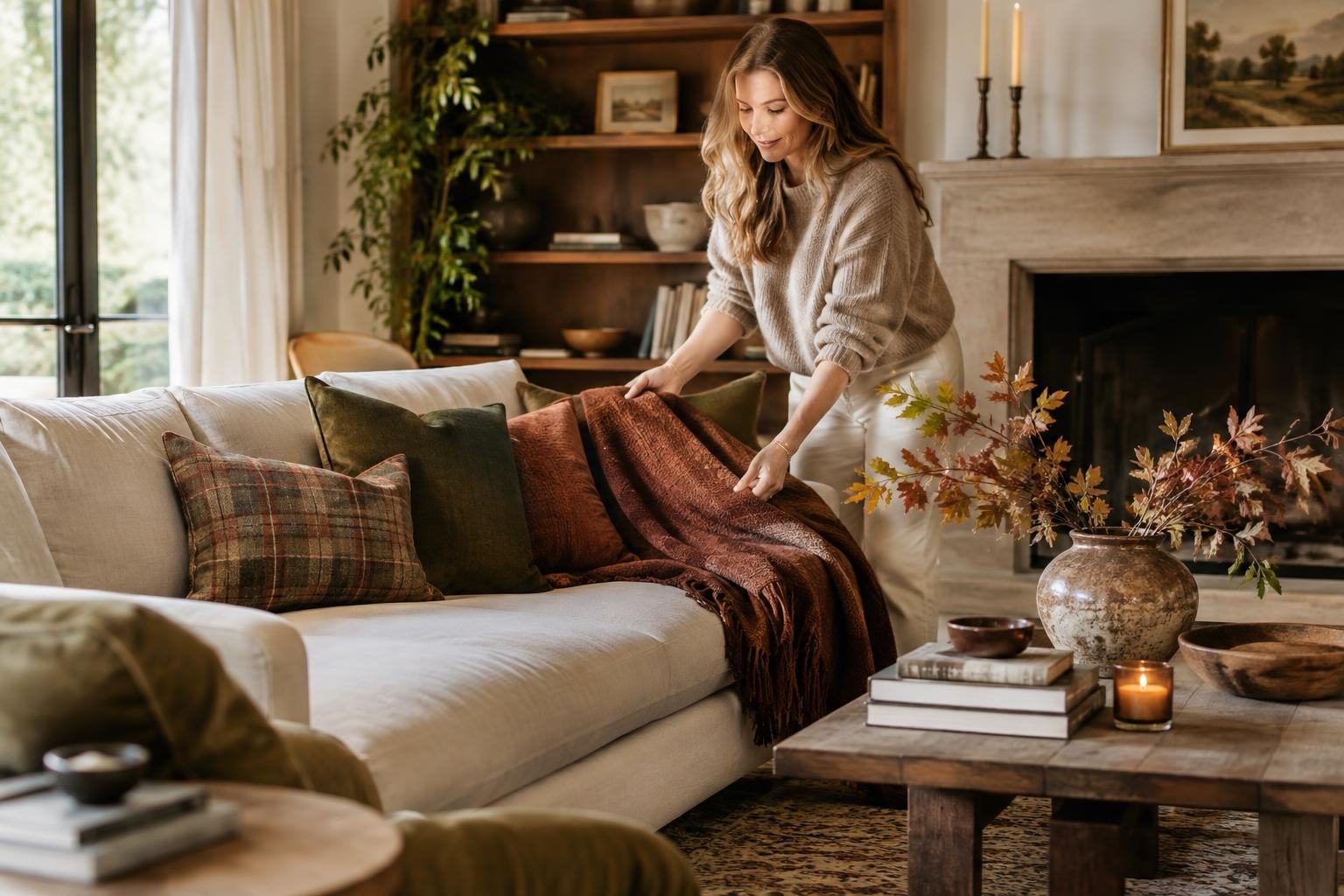
There’s a familiar seasonal decorating trap: add a few rust-colored cushions, display something shaped like a pumpkin, and suddenly the living room feels less like itself. Interior designer Amber Lewis prefers a subtler route. Her idea of fall begins not with themed objects but with a feeling—one she calls her “fall feeling”—and a room comfortable enough to settle into.
That distinction is useful whether autumn where you live means chilly evenings or little more than a shift in light. Seasonal atmosphere can come from changing texture and emphasis, not replacing the whole room. Lewis, who lives in Los Angeles, says she brings out reachable throws, mixes pillow textures and makes sure there’s a comfortable place to sit. The aim is not a showroom transformation; it’s a home that invites people to use it.
Let the palette echo the season, not imitate it
Lewis looks outdoors for cues, drawing on greens—from mossy to deep forest—alongside rust, saffron and warm cream. These shades suggest the natural world without relying on a literal harvest display. Her approach also makes color easier to live with: a few tones can connect objects and patterns that might otherwise compete.
For a room with neutral walls, that connection might come from a green cushion, a rust-colored throw and a book or ceramic piece in a similar warm shade. If you already love a brighter or cooler palette, there’s no need to force it into autumn colors. The underlying idea is simply to choose a small group of tones and repeat them, so seasonal additions feel considered rather than scattered.
Textiles offer a low-commitment way to try this. A linen cover, wool blanket or washed-out plaid can shift the mood without repainting or buying a matching set. Lewis’s preference for earthy checks is a nod to the season, not a costume—and that restraint helps the pieces remain useful beyond fall.
Make contrast do the work
Some of Lewis’s material pairings depend on contrast: the rugged character of stone beside the warmth of timeworn wood, or soft linen alongside patinated leather. In a home that doesn’t have a limestone fireplace or plaster walls, the same principle can be applied through smaller objects and furnishings. A smooth table beside a nubby throw, for instance, gives the eye and hand different experiences without requiring a major renovation.
Her approach to mixing patterns is similarly practical. Rather than insisting that every print match, she advises judging fabrics together and keeping their tones in conversation. Lay a cushion cover beside a blanket, step back, and notice whether one piece jars. Color provides the common ground; texture and pattern can supply the variety. That’s a more flexible rule than buying a coordinated collection, and it leaves room for pieces gathered over time.
There is a useful budget implication, too. Lewis’s emphasis on materials that “wear in, not out” points toward choosing for lasting usefulness rather than a single season. It doesn’t mean every home needs natural stone or reclaimed oak. A well-used wooden bowl or a secondhand textile can bring a similar sense of character; the value lies in how a piece feels and fits, not in its price tag.
Style for real life, not just the photograph
The finishing touches matter most when they tell a story or serve a purpose. Lewis suggests vintage vessels with branches, stacked books and an object with personal meaning. On a bed, layers can be as simple as crisp sheets, a duvet and a throw placed where someone can actually pull it over their feet. In a living room, a blanket folded on a shelf may look tidy, but one draped within reach is more likely to earn its place.
That distinction separates a cozy home from a collection of cozy-looking props. A room can feel personal without being crowded, and comfortable without turning every surface into a display. Keep the objects that mean something to you; leave space for daily life.
Lewis’s version of fall is less about decorating for a date on the calendar than making a room feel welcoming. When the season passes, the colors can stay, the throw can keep doing its job, and the well-worn pieces can continue to gather stories. The best autumn detail may be the one you still reach for when the decorations are gone.