
By Halloween, a pumpkin can be doing two jobs: glowing on the doorstep and waiting to become dinner. The second job calls for a different sort of squash. A large carving pumpkin that has spent days outdoors is generally a poor cooking choice: it can be watery and bland, while smaller culinary squash tend to be easier to handle and more rewarding to eat.
That distinction makes the season’s familiar orange symbol more than a decoration. Halloween’s harvest associations reach back to Samhain, an ancient seasonal festival; the pumpkin is a much more recent, US-influenced emblem. In the kitchen, though, it has a practical claim to attention: winter squash can be stored, cooked in several ways and used in both savoury and sweet dishes.
Choose a squash for flavour, not for carving
“Pumpkin” covers a broad family of squash, with many varieties grown around the world. Some arrive in summer, while most are harvested in winter. For cooking, look beyond the biggest, roundest specimen. A smaller squash is usually less awkward to cut and store, and its flavour is more likely to come through clearly.
Think of the recipe before you shop. A smooth, sweet-fleshed squash is well suited to purée, while a firmer one can be roasted in pieces. If you are not sure what is available, ask a greengrocer which varieties are intended for eating. The best Halloween pumpkin for the table is not necessarily the one that makes the most impressive lantern.
There is also a useful bit of kitchen economics here: a squash can stretch across more than one meal. Roast or cook enough to make a purée for risotto, then keep any remaining cooked flesh for soup or another dish. The exact yield will depend on the squash and the recipe, so it is better to treat this as a flexible ingredient than expect every pumpkin to behave identically.
Let pumpkin do the quiet work in risotto
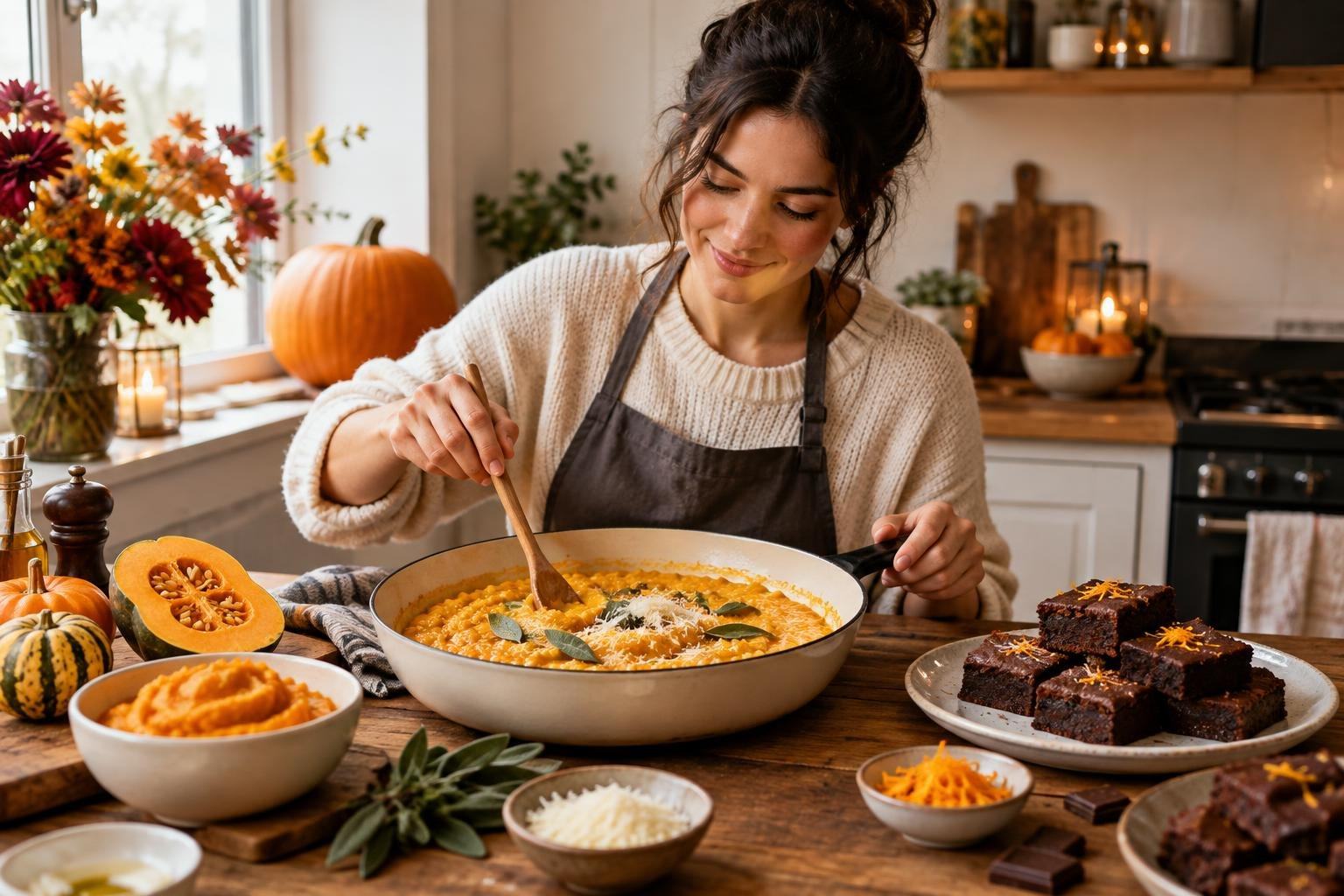
Risotto is a good showcase because pumpkin’s gentle sweetness can sit at the centre without needing an elaborate supporting cast. A base of shallot and garlic gives the dish savoury depth; Arborio rice cooks as stock is added gradually, softening while releasing starch that gives the finished risotto its characteristic creamy texture.
Stirring in smooth pumpkin purée near the end brings colour and a mellow, rounded flavour. Cheese and seasoning finish the dish, while brown butter and sage add a fragrant, nutty contrast. It is a pairing that works because the squash’s sweetness meets the butter’s toasted notes and sage’s herbal edge—not because the plate needs a long list of ingredients.
For a home cook, the main lesson is to keep the purée smooth and the rice moving, adding stock as it is absorbed rather than flooding the pan. Risotto rewards attention, but not fuss: taste as you go, and stop cooking when the rice is tender with a little bite. Comfort food can still feel considered when each ingredient has a clear role.
A brownie with a harvest-season twist
Pumpkin’s natural sweetness also makes it an inviting companion to dark chocolate. Finely grated squash can be folded into a familiar brownie mixture, where its mild flavour lets the chocolate remain in charge. Orange zest adds a bright, aromatic note and makes a pleasing match for the season’s warm colours.
Here, texture matters. Squash contains moisture, and different varieties can behave differently, so follow a recipe designed for grated pumpkin rather than simply adding an arbitrary amount to any brownie batter. The aim is a fudgy square, not a cake made unexpectedly damp. If children are helping, grating and stirring are useful tasks with supervision; an adult should handle sharp knives and the hot tin.
These brownies also make a thoughtful alternative to handing out only wrapped sweets. They are easy to share with neighbours or serve at home, though anyone offering homemade food should consider guests’ allergies and preferences. A small label mentioning ingredients such as wheat, eggs or dairy can make sharing more comfortable.
Halloween cooking need not mean rescuing every carved lantern or producing an elaborate feast. Choose a squash meant for eating, give its flavour room to shine, and let one ingredient travel from savoury supper to a chocolate-rich treat. The most satisfying harvest, after all, is the one that makes it from the doorstep to the dinner table.