
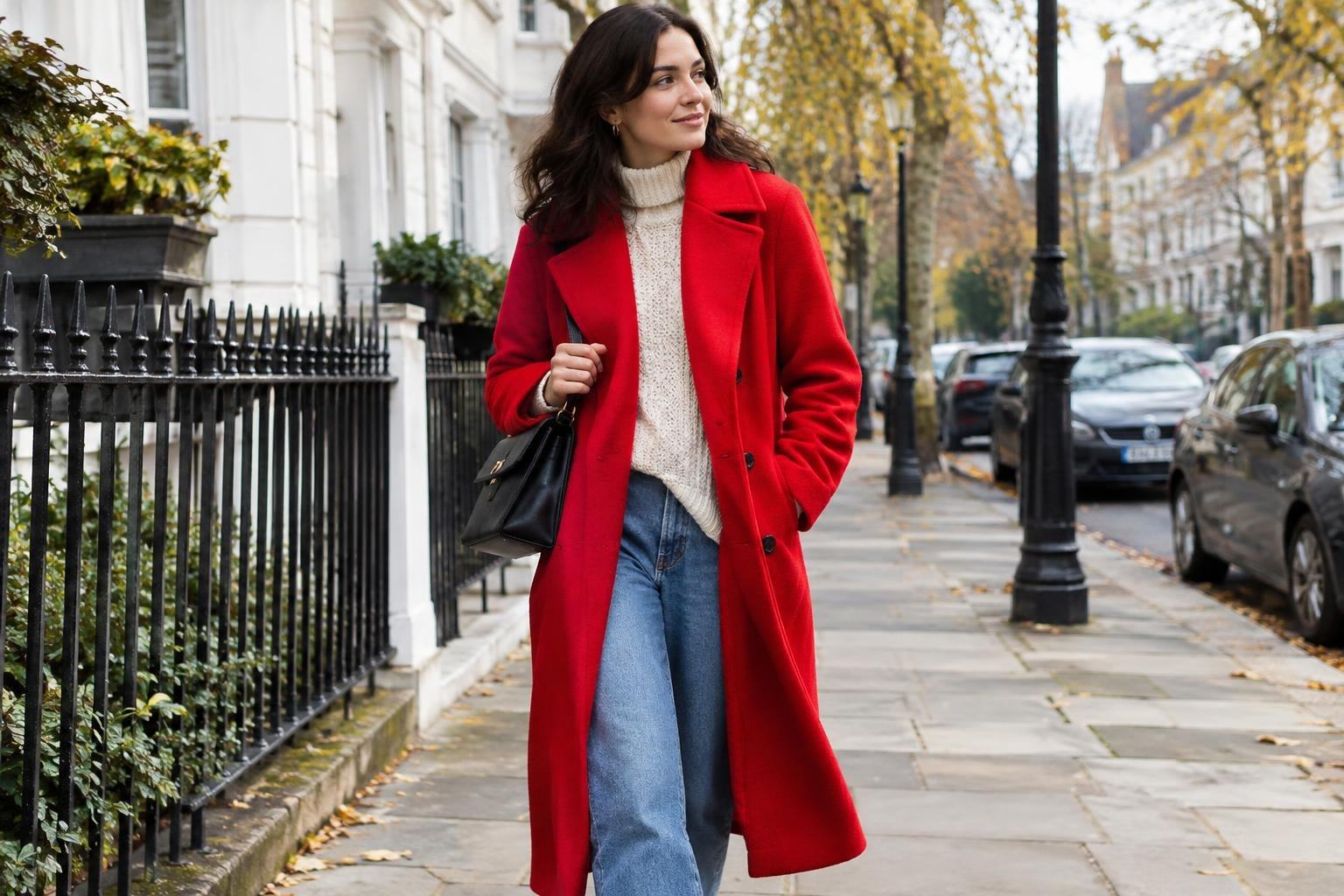
There’s a reason the black coat earns its place by the door: it goes with almost everything, asks little of you and rarely feels like a risky choice. But when the same dependable layer meets the same jeans and boots day after day, a flash of colour can make getting dressed feel less automatic.
For autumn and winter 2026, the standout outerwear mood is cheerful rather than cautious. Pastel pink, cerulean blue, tomato red and chartreuse are among the shades in the mix, alongside expressive prints and tactile finishes. That doesn’t mean black is out. It means a coat can be more than a practical final layer: it can set the tone for the whole outfit.
Let the coat do the talking
A statement coat may sound like a commitment to maximalism, but it can be an easy way to experiment precisely because it sits over the clothes you already know how to wear. Keep the layers underneath simple—denim, knitwear and a neutral top, for instance—and let the outer layer provide the colour or pattern.
Consider the range of possibilities: a long sky-blue coat with an abstract print brings energy to jeans and white trainers; a burgundy-and-pink deer-print design, with faux-fur details at the collar and cuffs, leans into a more playful look. A moss-green faux-leather style offers a quieter route into colour, pairing naturally with winter neutrals such as chocolate brown, navy or charcoal.
There are bolder options, too: leopard print with coloured sleeves, a chartreuse wool-blend coat, or a pastel-pink trench that contrasts a familiar silhouette with an unexpected shade. These are different ways to make an outfit distinctive—not a checklist of trends you need to adopt all at once.
Choose for your real wardrobe, not just the mirror
The most useful question is not simply, “Is this colour fashionable?” It’s, “Will I reach for it on an ordinary day?” Think about the clothes and shoes you wear most, the weather you dress for and where the coat needs to take you. A dramatic print may feel exciting in a fitting room but be less versatile if most of your wardrobe is already patterned. A coloured trench or a single-tone coat might be easier to repeat.
Shape matters as much as shade. A longline cut can give more coverage, while structured shoulders create a sharper outline; neither is automatically better. Consider how the coat sits over your usual layers and whether the sleeves, length and fastening work for your routine. If you rely on a roomy bag, cycle, use mobility aids or simply dislike a restricted fit, those everyday details deserve as much attention as the colour.
Texture changes the effect, too. Faux fur reads as cosy and conspicuous; faux leather brings a sleeker, more graphic finish; wool blends can feel closer to classic tailoring. Check the garment’s care information before buying, particularly if the fabric or trim needs special attention. A coat that suits your life is more likely to earn its keep than one chosen only for its first impression.
A lower-risk way to try the trend
If a bright full-length coat feels like too much, start with a shade that already appears in your wardrobe, or look for a more restrained colour in a familiar cut. You can also try the look second-hand, which may make an expressive piece easier to explore without treating it as a long-term investment. There is no rule that says a colourful coat has to replace your dark one; the two can serve different moods and occasions.
Most importantly, don’t confuse “statement” with “special occasion”. A coat earns its place through repeat wear, whether that means the school run, a commute, a weekend market or a walk with a friend. The best colour is not necessarily the brightest one. It’s the one that makes you want to step outside—and still feels like you.