
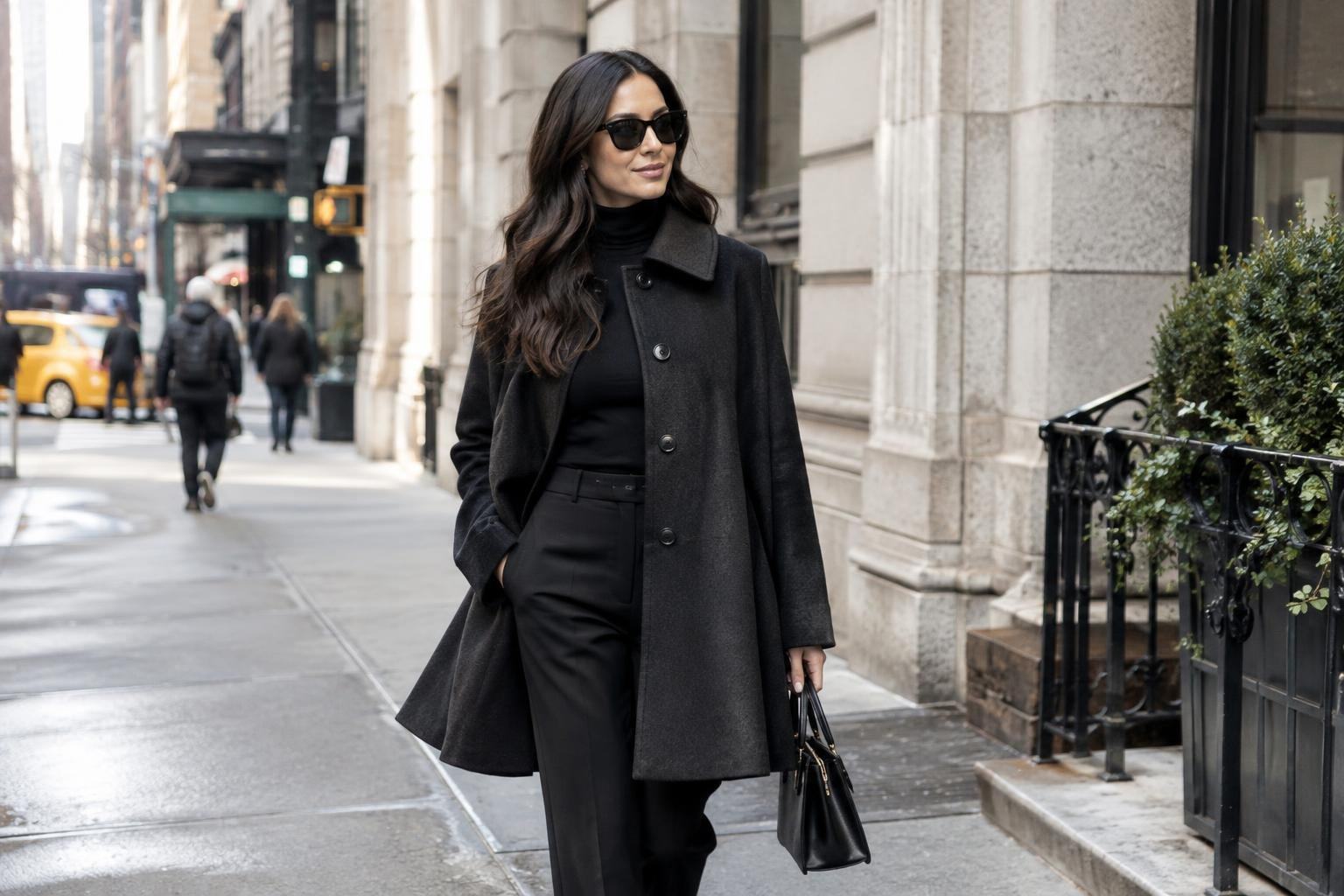
Some outfits announce themselves with colour or a dramatic accessory. Others make their point more quietly: a clean line here, an unexpected proportion there. In New York, Olivia Munn wore a black turtleneck, tailored trousers and sleek ankle boots, then added a trapeze car coat—a choice that turns a familiar winter layer into the outfit’s most memorable detail.
The distinction is in the shape. A conventional car coat tends to read as a straightforward, practical piece; a trapeze version opens out into an A-line, giving the fabric room to move. That gentle swing lends polish without requiring a complicated outfit underneath. It is a useful reminder that style often comes down not to buying a whole new wardrobe, but to noticing how one proportion changes another.
Why the silhouette feels different
Munn’s look works because its pieces do different jobs. The slim, dark base keeps the overall outline neat, while the coat adds width and movement. The result is not fussy, but it does have presence: the coat can shift as its wearer walks, making an otherwise restrained combination feel less static.
That contrast also explains why the shape can feel both relaxed and dressed up. The car coat carries practical associations; the flared line brings a touch of old-school elegance, without asking the wearer to commit to a full vintage look. The effect is less about a specific decade than about giving everyday clothes a little more swing.
In the source outfit, the coat is the finishing layer over a simple black-and-tailored combination. Nour Hammour’s Jane Coat is one example of the silhouette, but the idea is broader than any single label or price point: look for a coat whose line gradually widens rather than falling straight down. The movement is the point, not the name on the tag.
How to wear the shape in real life
A trapeze coat does not need a special occasion. Over straight-leg trousers and a fine-knit top, it adds shape while keeping the base uncomplicated. With a skirt or dress, it can create a softer outline; with jeans and flat shoes, it makes a casual combination feel more intentional. These are options, not rules—the most useful starting point is to consider what you want the coat to do over the clothes you already wear.
Because the silhouette adds volume, it may help to keep one part of the outfit relatively streamlined, as Munn did with her dark top and tailored trousers. That does not mean everything underneath must be fitted. It simply gives the eye a point of contrast, so the coat’s flare reads as a choice rather than as bulk. If you prefer a looser look throughout, let the proportions feel deliberate and choose layers you can move comfortably in.
Fit matters more than a supposed universal formula. Check that the shoulders sit comfortably and that the coat allows room for the layers you actually wear in cold weather. If you are petite, tall, broad-shouldered, curvy or none of those labels feels useful, try it on with your usual shoes and clothes: the mirror test is whether the shape feels balanced to you, not whether it matches a prescribed body type.
A trend worth translating, not copying
The temptation with a sharply defined trend is to search for its exact hero item. But a dramatic silhouette can be expensive, and outerwear has to earn its place through warmth, comfort and frequent use as well as appearance. A secondhand find or a coat already in your wardrobe may give a similar sense of movement. The important question is whether the line lifts outfits you genuinely wear.
Munn’s outfit makes a quiet case for detail over spectacle. A turtleneck, trousers and boots are familiar; the coat changes their mood without making them harder to live in. That is the appeal of the trapeze car coat: not that it transforms a person, but that it lets an everyday outfit move a little differently.