
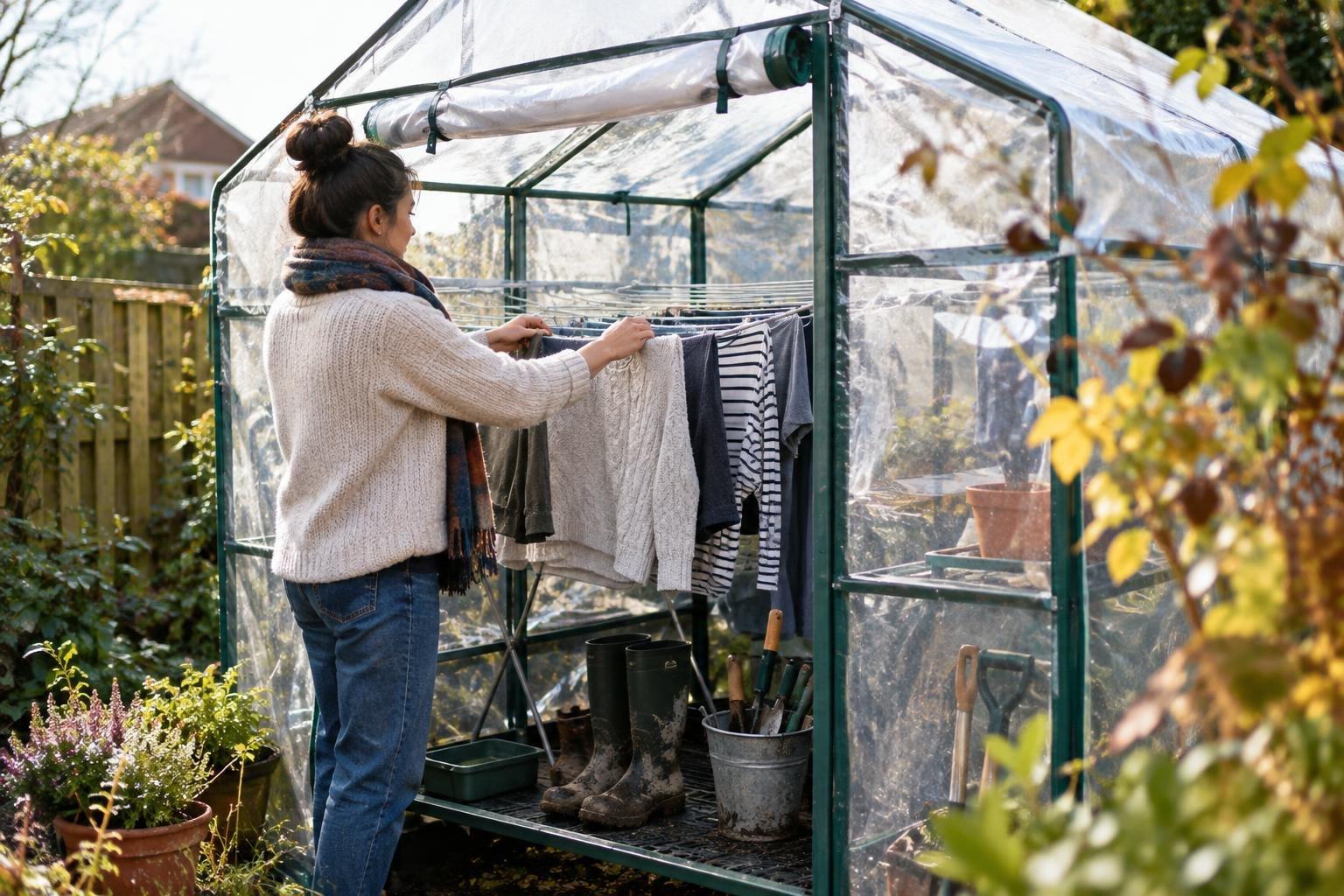
Once the summer pots are fading and seed trays have been put away, a mini greenhouse can start to look like garden clutter. But before you fold it up or consign it to the shed, consider a less obvious role: a covered drying space for the things autumn leaves damp.
Garden design expert and horticulture influencer Ish Kamran says he removes the middle shelf in his plastic greenhouse to make room for clothes on an airer. The shelter keeps laundry out of the rain, while the enclosed space can be a little warmer than the surrounding air. His key proviso is to leave some ventilation.
A sheltered spot, not a heated laundry room
The appeal is practical rather than magical. A plastic greenhouse does not need to be heated to offer a useful advantage: it can provide cover and catch some warmth, while keeping a load of washing out of a shower. That may make it a welcome alternative when there is no porch, canopy or spare indoor floor space.
But a greenhouse is not a guaranteed shortcut to dry clothes. Air movement matters as much as warmth, and a closed, damp space can leave fabric clammy rather than fresh. Use a vent or leave the door slightly open when conditions allow, give garments room, and check on them rather than assuming they will dry faster than an indoor airer. In very wet, cold or still weather, drying may simply take longer.
It is also worth thinking about where the water goes. Laundry that is dripping wet can add plenty of moisture to a small enclosed space, so spin it well first and avoid packing the greenhouse tightly. If condensation is collecting on the plastic, increase ventilation or move the drying indoors; otherwise, the greenhouse may be sheltering damp rather than helping it escape.
From muddy boots to cleaned-up tools
The lower shelf can serve as a place for muddy shoes after a walk, keeping them under cover while they dry. It is a modest but useful boundary between the garden and the hallway—especially for anyone without an entrance area where wet footwear can be left.
Cleaned gardening tools can also go inside to dry between jobs. Kamran notes that storing tools in a dry space can help reduce the conditions that encourage rust. Let them dry thoroughly before putting them away, and keep them separate from laundry or anything that could be stained by soil or residue.
There is a seasonal gardening use, too: the greenhouse can provide a place to dry seeds or tubers before they are stored. The cover may be helpful when autumn weather is unsettled, but it should not be treated as a substitute for checking that whatever you are drying is ready for storage. Different plants have different needs, so follow guidance for the particular seed or tuber rather than relying on a single rule.
Useful shelter, with limits
A mini greenhouse can also offer temporary cover for vulnerable potted plants during heavy rain. That does not make it a dependable frost-proof refuge: conditions inside can change, and the structure is still exposed to the weather. Move plants back out when the risk has passed, and make sure the greenhouse is secure, especially in windy conditions.
These jobs share one simple idea: the greenhouse is useful not only for what it grows, but for the small transitions of garden life—wet to dry, muddy to clean, harvest to storage. It may not replace a proper indoor drying space or plant shelter, but it can make an underused corner work harder. This winter, the best use for that little plastic structure might be less about growing something and more about giving everyday things somewhere sheltered to dry.