
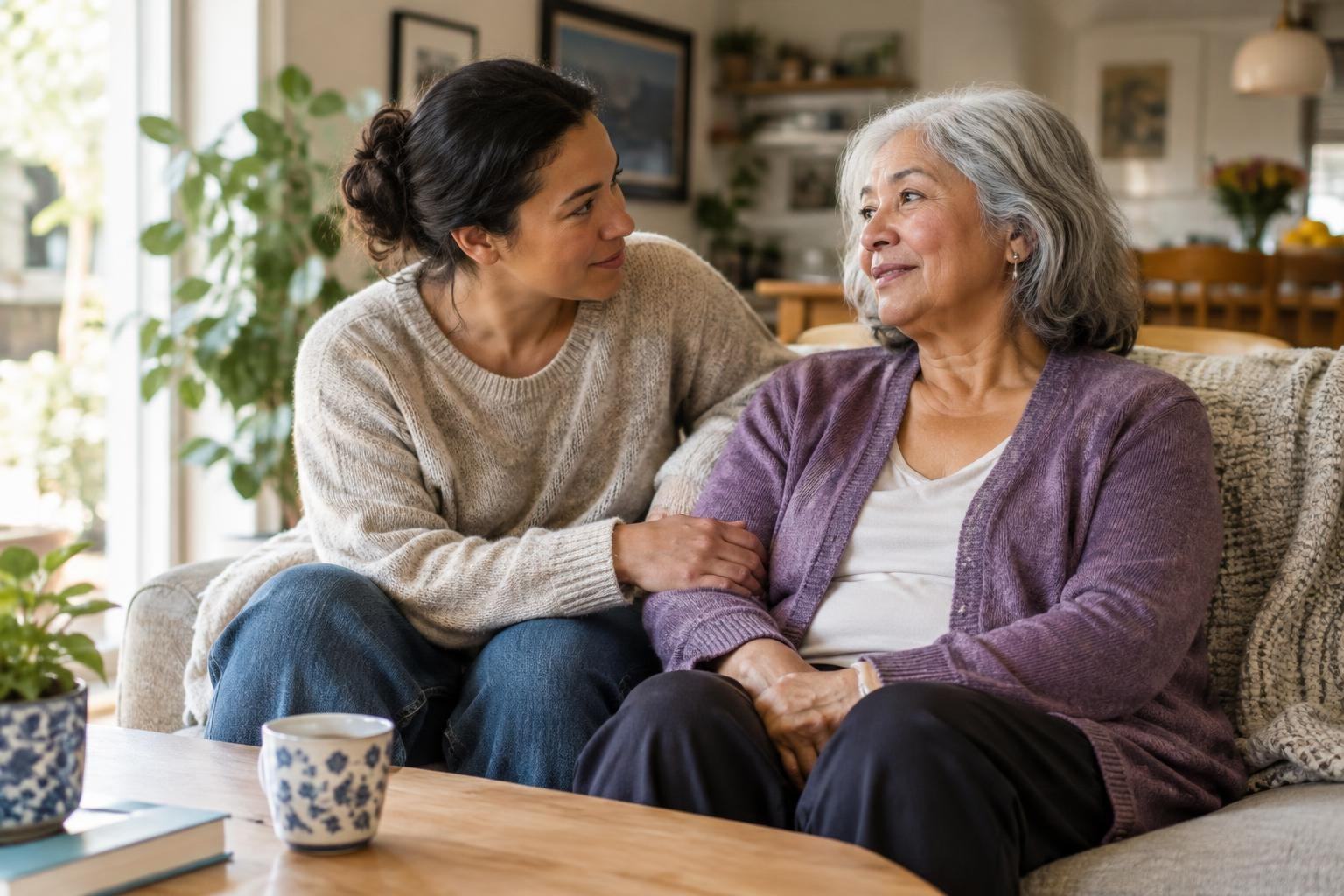
When an older relative needs help getting to an appointment, managing household tasks or bathing, the support often comes from someone already balancing work, relationships and their own needs. A new study offers a striking way to measure that contribution: across a lifetime, U.S. women can expect to spend seven years caring for older family members or friends, compared with four years for men.
The estimate, based on research by University of Michigan researchers Vicki Freedman and Crystal Yee To Ng, draws on nearly 8,500 responses to the National Study of Caregiving and federal population data. It covers adults aged 20 and older and compares estimates for 2011 and 2023. The researchers report that women’s expected caregiving rose from six years in 2011 to seven in 2023, while men’s remained at four.
A lifetime measure reveals what a snapshot can miss
Many studies capture caregiving at a particular moment or over a short period. This research takes a longer view, combining information across age groups to estimate how many years people might spend providing care if current patterns continue. It is a population-level estimate, not a prediction for any one person.
That distinction matters. Seven years does not mean every woman will provide seven uninterrupted years of care, nor does the figure tell us how many hours a week she might give or how demanding the tasks will be. The estimate makes a long-running form of support visible, but it cannot capture the full texture of individual lives: the late-night calls, the transport arrangements, or the coordination that may happen alongside hands-on care.
The gap also varies by relationship. Women and men are estimated to spend roughly the same amount of time caring for a spouse or partner—about a year and a half. For other relatives and friends, the difference is wider: women are expected to provide more than an additional year of care for a parent, several extra months for a grandparent, and more than an extra year for extended family and friends. The researchers found a gap across different kinds of assistance, from personal care to rides.
Care is shaped by more than family affection
The study documents a disparity; it does not establish exactly why it exists. Social expectations about who notices, organises and delivers family care may be part of the picture, but the researchers point to a broader set of forces that could shape future patterns, including changing family structures, the cost and availability of paid care, and social norms.
The demand is growing. The number of family caregivers supporting U.S. adults aged 65 and older rose from 18 million in 2011 to more than 24 million in recent years, according to the study’s source material. Meanwhile, more older adults are living without close family. That could mean greater reliance on friends, neighbours and other community ties—not simply more pressure on daughters, wives or other relatives.
For families, the findings offer a reason to make invisible work easier to see. A practical starting point is to name the tasks involved—appointments, meals, paperwork, personal care—and discuss who can take responsibility, rather than treating “helping out” as a single, undefined role. Where it is available, outside support may also be worth exploring. These steps cannot resolve the broader imbalance, and not every household has the same options, but they can help turn an assumption of automatic availability into a more deliberate conversation.
Make the work visible before it becomes urgent
Because these figures describe U.S. patterns, they should not be applied as a universal measure of women’s lives. They also describe expectations based on current rates, not a guaranteed future: changes in family size, paid care and social habits could shift the picture. Still, the contrast between equal estimated years of spousal care and larger gaps across other relationships is a reminder that caregiving is not one experience, or one person’s responsibility by nature.
The years in the study are not merely years spent helping. They represent time that families and communities depend on, often without naming it as essential work. Seeing that time more clearly is a first step toward asking a better question: not only who will care, but how the care can be shared?