
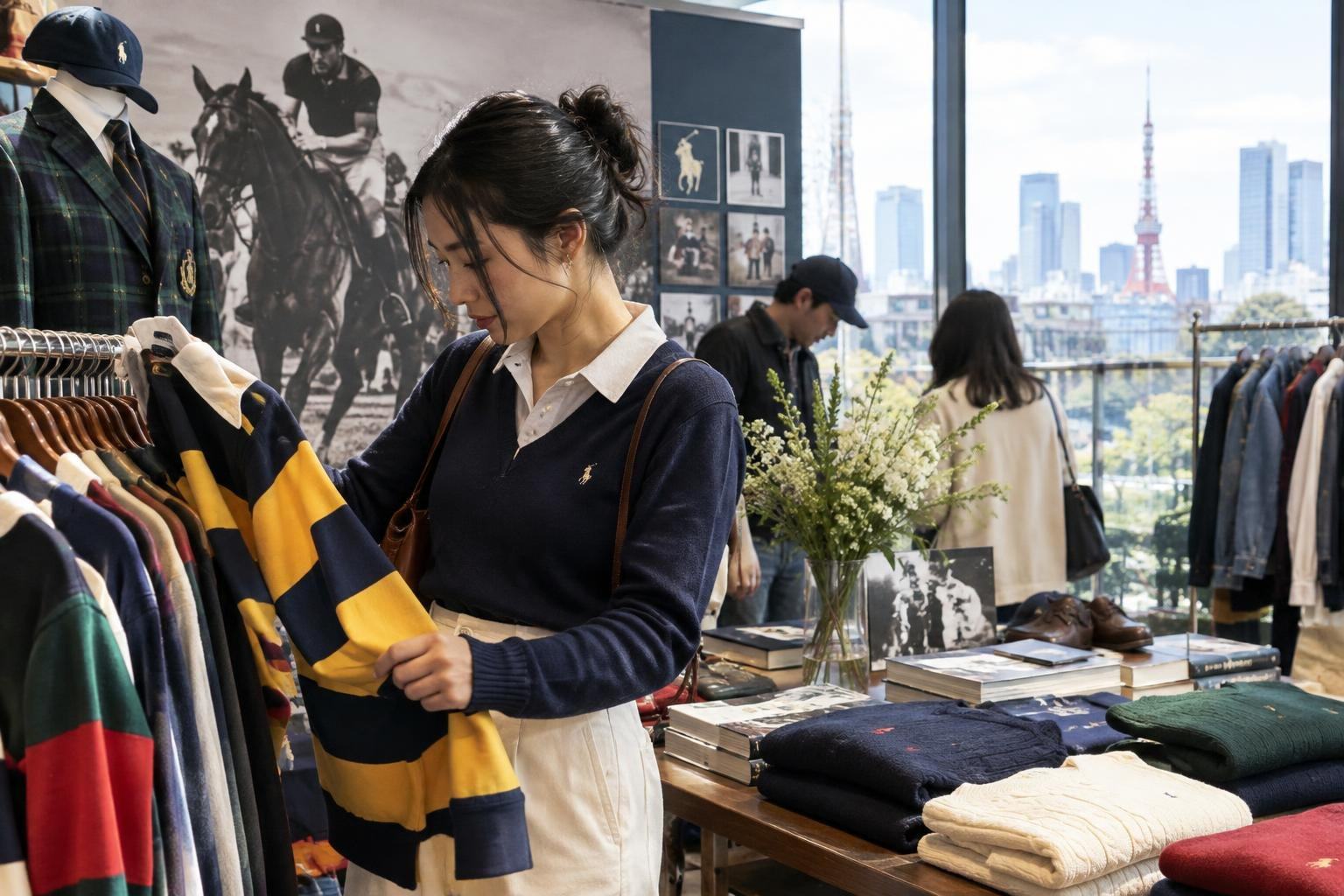
A vintage rugby shirt can be more than a good find. For collectors, its colour, label and wear can point to a particular moment in a brand’s history—and to the people who have made that history their own. That idea is at the heart of PoloFest, Ralph Lauren’s first festival dedicated to its collectors, taking place in Tokyo from 23 to 25 October.
The timing is meaningful: 2026 marks 50 years since Polo Ralph Lauren arrived in Japan. At Jing Harajuku, in Tokyo’s Shibuya district, the event brings together an exhibition of archival garments, an international vintage marketplace and talks. Admission is complimentary, but tickets are available exclusively through Ralph Lauren’s LINE membership community.
From American influence to Japanese interpretation
The story begins in 1976, when Polo Ralph Lauren opened its first Japanese location inside the Seibu department store in Ikebukuro. Later that year, the brand held a runway show at the Tokyo Prince Hotel. Its arrival coincided with a wider appetite for American style in Japan, including denim, button-down shirts and Western wear.
But this was never simply a story of clothes travelling in one direction. The term Ametora—a blend of “American” and “traditional”—describes the Japanese embrace and reinterpretation of American classic dress. Local makers and wearers developed their own versions of those codes, sometimes refining or remaking the garments rather than merely reproducing them. That exchange gives PoloFest a richer backdrop than a conventional brand anniversary: the label’s history in Japan is also a story about how style changes when it crosses cultures.
Ralph Lauren now has more than 150 stores in the country, including a large flagship in Tokyo’s Omotesando neighbourhood. Yet the festival’s focus is not just on retail. Its mix of archive, market and conversation presents clothing as something people collect, study and live with—not only something to buy when a new season arrives.
Why a vintage market can tell a bigger story
The marketplace will feature international collectors and vintage sellers, including Japan’s Big Apple Store, the United States’ Millennial Decorator, Italy’s Tartan Vintage and Canada’s F as in Frank. Their presence makes the event a meeting point for different collecting cultures, as well as an opportunity to see how the same label can be worn and valued in different places.
That matters because an archive is not just a row of old clothes. It can reveal how a brand’s visual language has shifted—and which pieces have remained compelling to people long after their original release. For visitors who are curious about fashion but not dedicated collectors, that perspective offers a useful way to look at their own wardrobes: what makes a garment last for you? Is it the quality, the memory attached to it, the ease of wearing it, or the way it expresses a particular idea of style?
Polo’s appeal has also returned to the broader fashion conversation amid renewed interest in preppy and collegiate dressing. Recent collections from Dior, Miu Miu and Celine have drawn on varsity and campus references. That revival can make familiar staples—knitwear, rugby shirts, neat collars—feel newly visible, but PoloFest offers a reminder that such clothes already carry histories, and that their meaning is not fixed by a runway trend.
A brand world, not just a wardrobe
Polo began in 1967 with men’s neckties, and Ralph Lauren has described the label’s inspiration as a blend of Ivy League style, English influence and an imagined atmosphere of horses and “the good life.” The brand’s larger achievement has been to make those references feel like a coherent world. PoloFest turns that world outward, asking fans to bring their own knowledge and attachment into the conversation.
The event is part of a series marking Ralph Lauren’s 60th anniversary in 2027. Whether PoloFest becomes a regular gathering has not been announced. For now, its most interesting promise is in the meeting between brand history and personal history: a reminder that a piece of clothing can travel far from where it began, and become something new in the hands of the people who wear it.