
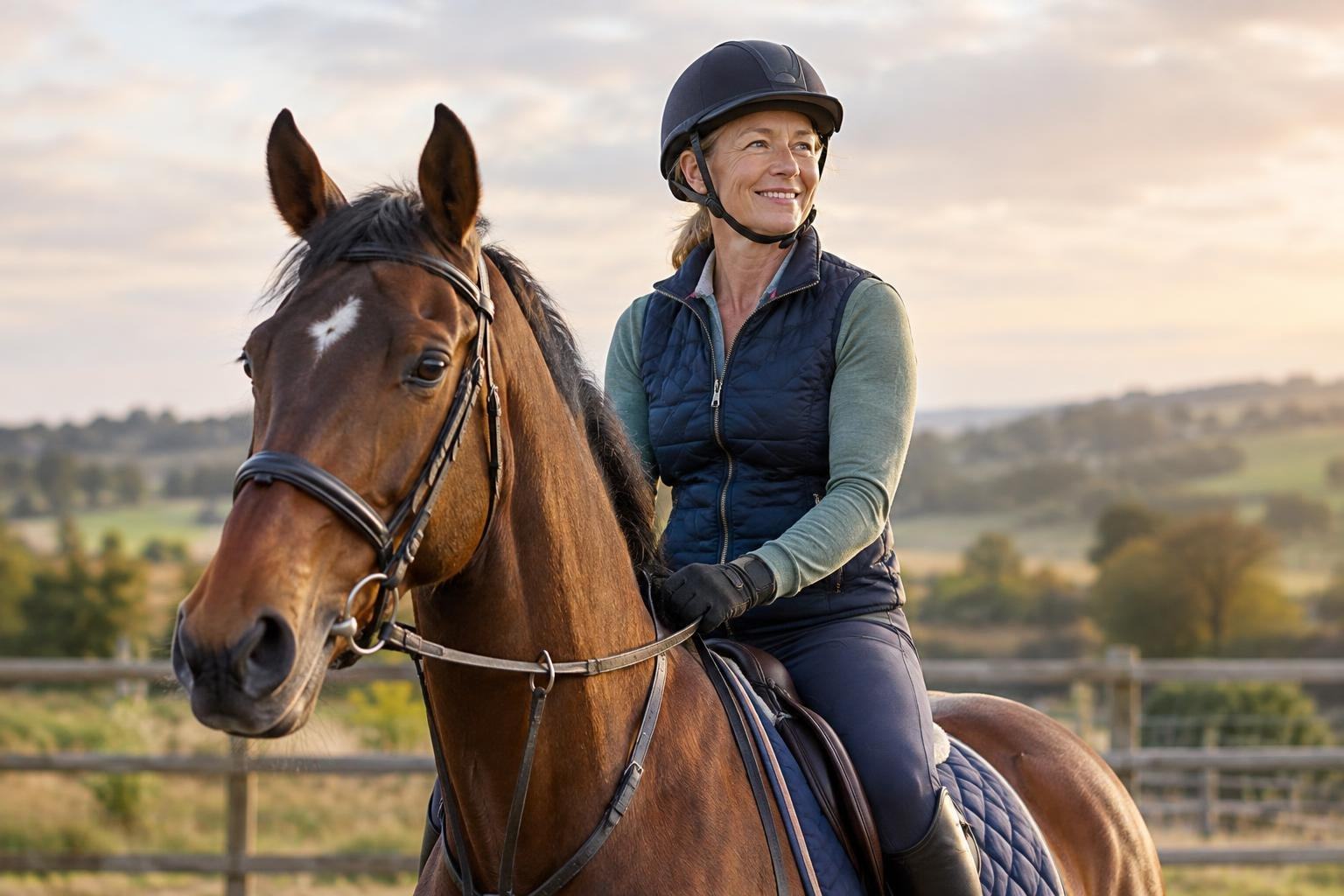
A familiar horse, a familiar route—and suddenly your balance, confidence or concentration feels less dependable. For some riders, changes around perimenopause and menopause can make time in the saddle feel unexpectedly different. The important first step is not to assume you have lost your nerve: it is to notice what has changed and consider what might help.
Former advanced event rider and veterinary physiotherapist Antonia Bealby has described experiencing anxiety, palpitations, sweating and a sense that her core strength had changed. At 45, she did not initially connect these experiences with perimenopause. After seeking a diagnosis, she says, hormone therapy and lifestyle changes helped her regain confidence. Her story is one person’s experience, not a template for every rider—but it shows how symptoms can affect the practical business of riding, not just how someone feels off the horse.
When familiar skills feel less familiar
Perimenopause can bring fluctuating periods and symptoms such as hot flushes, disrupted sleep, mood changes and difficulty concentrating; experiences vary widely. Anxiety or palpitations can also have causes other than hormonal change, so new or concerning symptoms deserve a conversation with a health professional rather than a self-diagnosis.
In the saddle, even a temporary loss of sleep or a wave of heat can matter. Riding asks for balance, attention and quick decisions, while caring for a horse adds physical work before and after a lesson. A rider who feels less steady may understandably become cautious, and that caution can itself affect confidence. Taking a symptom seriously is not the same as deciding you are no longer capable.
That distinction matters in a sport where women may ride well into their 40s, 50s and beyond. As female health and fitness specialist Dr Jenni Douglas, a senior lecturer in exercise physiology at Hartpury University, has noted, understanding bodily changes can help riders make informed choices about training and support.
Build strength beyond the saddle
Riding can develop coordination, balance and muscular control, but it is not a substitute for every kind of exercise. Because it is relatively low-impact, it may not provide the same bone-loading stimulus as activities such as resistance training or weight-bearing exercise. That does not make riding less valuable; it means a broader movement routine may serve riders well.
Strength work need not begin with a complicated gym programme. Body-weight movements or manageable resistance exercises can be adapted to a person’s ability and built up gradually. Douglas has suggested simple options such as squats or incline press-ups; the useful principle is consistency and progressive challenge, not a punishing workout. Walking briskly or other aerobic activity can also complement riding. Anyone with health concerns, pain or a history of injury can ask a clinician or qualified exercise professional how to adapt activity safely.
Bone health is one reason to think beyond performance. Hormonal changes can affect bone density, but an individual’s risk depends on more than menopause alone. A fall from a horse is a real possibility at any age; riders should discuss personal bone-health concerns with a healthcare professional rather than infer their risk from age or symptoms.
Fuel and support the rider you are now
Menopause is not a reason to slash calories or ban a whole category of food. Adequate nourishment supports recovery and day-to-day energy, particularly when riding is combined with stable chores or other exercise. A varied diet that includes protein and sources of calcium, alongside fruit and vegetables, is a more useful starting point than rigid rules about carbohydrates or particular fruits. Individual needs differ, and a clinician or registered dietitian can help with specific concerns.
Treatment is personal, too. Hormone therapy can relieve symptoms for some people, but it is not suitable for everyone and decisions should be made with a qualified healthcare professional, taking account of symptoms, medical history and preferences. Non-medical adjustments may help alongside treatment or on their own: choosing a cooler time to ride, shortening a session on a difficult day, or returning to more demanding work gradually. If focus or steadiness feels compromised, opting for a quieter ride or asking for support is sensible risk management—not failure.
A changing body may call for a different plan, not a farewell to the saddle. The goal is not to ride through every symptom or prove that nothing has changed; it is to keep the partnership with your horse responsive to the rider you are today.