
The first cold morning can make summer outfits feel suddenly impractical. But winter dressing doesn’t have to mean retreating into the same anonymous coat and sweater every day. The more interesting challenge is working with layers, texture and proportion to make warmth feel like part of the outfit—not an obstacle to it.
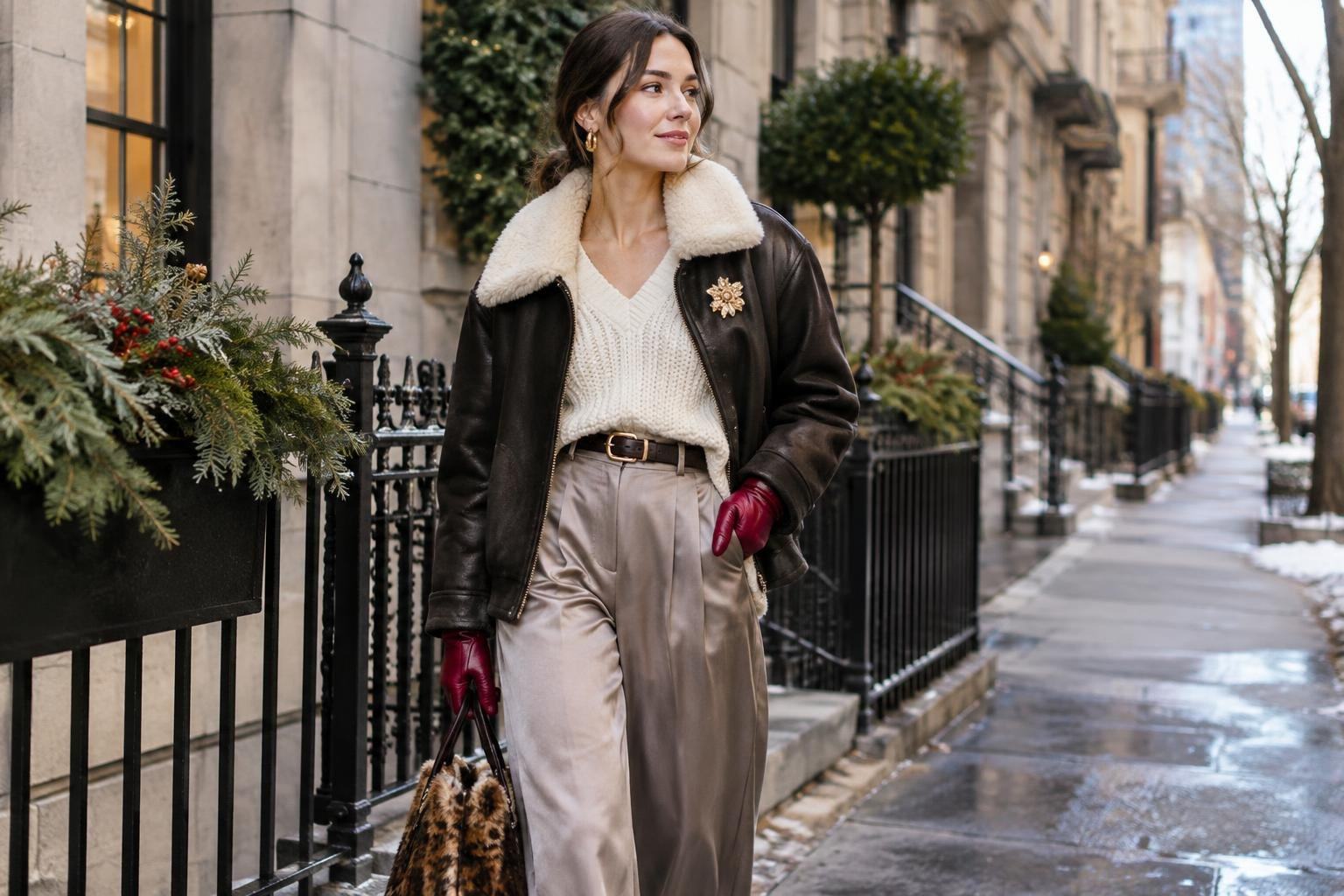
A November 2026 shopping edit makes that case through a mix of outerwear, knits, trousers, shoes and accessories. Its 44-item premise is broad, but the most useful clues are in the combinations: a leather-look jacket with a soft collar, a belted cardigan, satin trousers, a floral brooch and colored gloves. Together, these suggest a winter wardrobe built less around one headline trend than around contrast.
Let texture do the talking
In cold weather, outfits often involve fewer visible pieces: coat, knit, trousers, boots. Texture helps those basics feel considered. A chunky V-neck sweater has a different presence from a smooth layering tee; satin trousers catch light differently from denim; a calf-hair tote adds a tactile note without requiring a complicated outfit.
That doesn’t mean every surface needs to compete. Try pairing one noticeable texture with quieter staples: satin trousers with a plain knit, or a tactile bag with a simple coat. The J.Crew Remi exaggerated-barrel trousers in double-faced satin and the Open Edit V-neck sweater point toward that kind of balance. The appeal is not that either item must be worn exactly as pictured, but that a familiar silhouette can feel fresh when its fabric changes.
Make the silhouette earn its place
Winter layers can add visual bulk, so shape matters as much as warmth. A belt can define a cardigan; a V-neck can create space around the face; a tapered trouser can balance a fuller top. The edit’s examples include a belted wrap cardigan, a V-neck sweater and Maeve’s tapered taffeta pants—different routes to giving an outfit a clear outline.
Proportion is personal, not a rulebook. If you prefer a roomy coat, a straighter trouser may feel comfortable; if you like a close-fitting knit, a wider leg can bring movement. The point is to notice how pieces relate to one another, then adjust for your own comfort, climate and routine. A look that works for a short evening out may not be the one you want for a long commute.
Accessories can refresh what you own
The smallest pieces may be the most adaptable. A brooch can be moved from a blazer to a coat or knit, while gloves in a color you enjoy can bring life to an otherwise familiar outfit. The Nili Lotan floral silk brooch and the edit’s suggestion of colored leather gloves are reminders that finishing touches need not be saved for special occasions.
There’s a practical case for this approach, too: one accessory can change the mood of clothes already in your wardrobe. Before buying, consider what it will pair with—your usual coat, a bag you carry often, or the shoes you already reach for. A striking item that only works with one outfit may be less useful than a quieter one that earns regular wear.
Choose the version of winter style that fits your life
The named pieces range from accessible high-street options, such as a Zara printed midi skirt and a Mango faux-leather jacket with a faux-fur collar, to designer footwear and accessories. That range is a reminder that an editorial trend forecast is not a shopping list everyone needs to complete. You might borrow the idea—a soft collar, a longer boot, a small decorative accent—without buying the featured item.
Start with the part of winter dressing that feels least satisfying: perhaps your coat is practical but plain, or your work trousers never feel right with warm layers. Then look for one change that solves that particular problem. The best winter outfit isn’t the one with the most new pieces; it’s the one that makes getting dressed feel a little more deliberate, and a little more like you.