
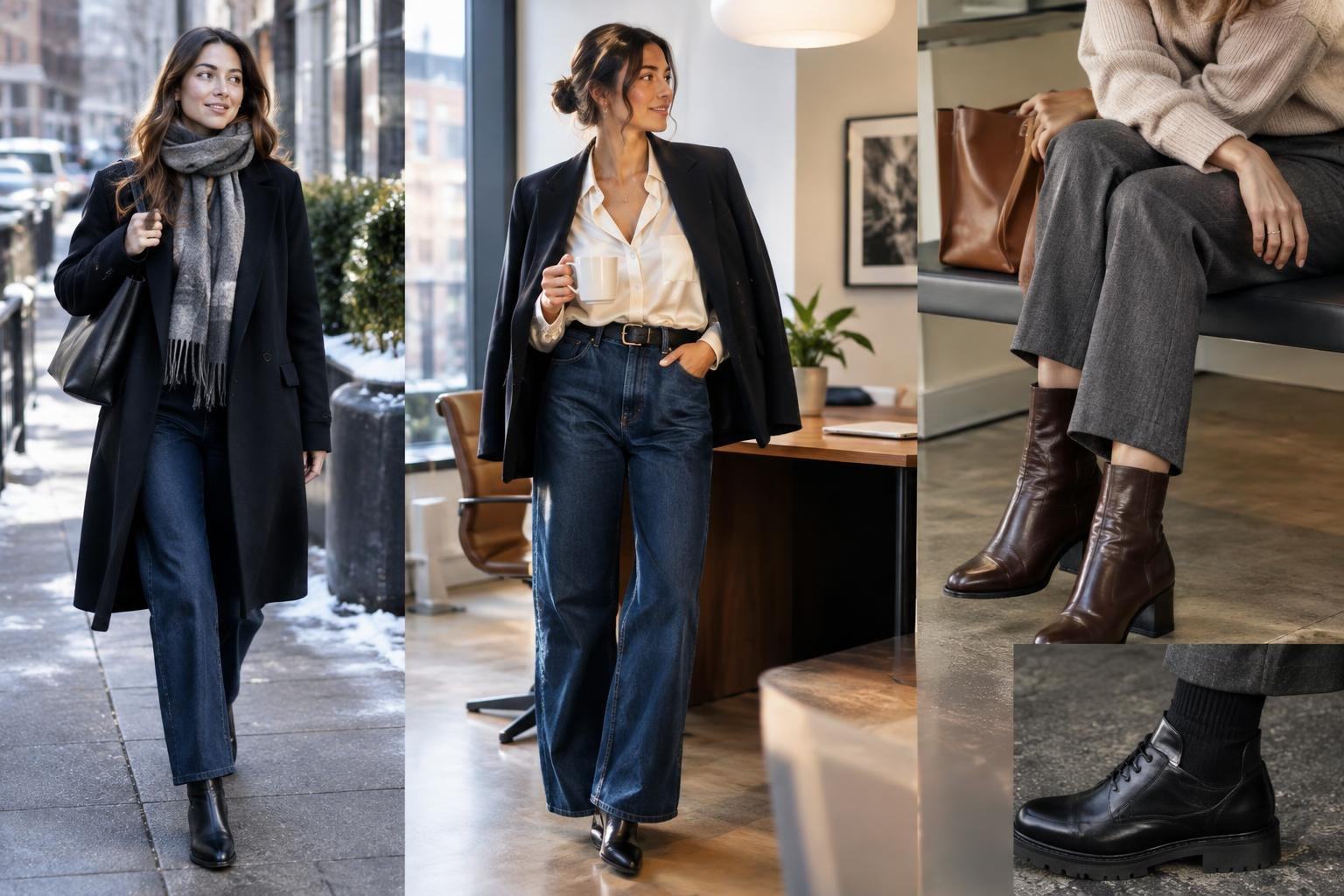
Winter can make a familiar work outfit feel suddenly out of step. The morning calls for a coat and socks; by lunchtime, the office is warm enough to make that chunky knit seem like a mistake. Add a meeting, a commute and whatever your workplace considers “polished,” and dressing for work becomes a small exercise in negotiation.
That is why the most useful winter style rules are not commandments. They are ways to balance comfort, context and how an outfit reads—with room to bend them when your job, climate or taste calls for something different.
Denim is less about the wash than the whole outfit
Jeans have become acceptable in many offices, but “jeans are allowed” does not answer the more interesting question: what makes them look considered? Lawyer and tech founder Kameron Monet puts the emphasis on fit and finish, favouring a clean hem and precise tailoring. A dark wash may suit a more formal occasion, but a smart shoe cannot rescue a pair that fits poorly.
The styling around denim can shift its tone. Hairstylist Mara Roszak balances roomy vintage jeans with a silk blouse, blazer or kitten heel; Maisonette co-founder Sylvana Ward Durrett uses a sleek belt to make a pair feel deliberate. Old Navy design executive Sarah Holme has another formula: dark-rinse wide- or curved-leg jeans with an oversized shirt and tailored jacket.
These are examples, not a new uniform. Poshmark’s Jamie Hunter recalls stricter rules at a former retail job, where dark denim was expected; she now wears lighter washes and white jeans, while still avoiding rips. The practical test is whether your denim suits the setting and looks cared for—not whether every office has the same definition of “professional.”
Dress for the day, not just the forecast
The commute and the workplace may be two different climates. Studio Subryan founder Merie Subryan prefers to start with a lighter base and add a sweater over a shirt or T-shirt, moving the layer to her shoulders or waist when the day warms up. She learned the hard way that reaching for a heavy knit at the first hint of chill can leave you uncomfortable by afternoon.
Superposition founder Storm Ascher makes the opposite trade-off. Because her work takes her between galleries, art fairs and airports, she would rather dress for her plans than carry a coat for a brief commute. Thin layers, stockings and a silk scarf offer ways to adjust without relying on a bulky extra garment.
Neither approach is the rule. If you have a long outdoor wait, mobility needs or limited space to store layers, warmth may matter more than a streamlined outfit. If you move between heated buildings, removable layers are useful. Before getting dressed, consider the coldest and warmest parts of your schedule—not only the temperature at the door.
Socks and boots can change the outfit’s proportions
Bare ankles do not suddenly become wrong on a universal date. Designer Veronica de Piante judges them in context: cropped trousers and flat boots may work in early autumn, while a heavy winter coat can make exposed ankles feel visually out of balance. It is a styling cue, not a rule about what anyone should tolerate in the cold.
Her preference for matching socks to trousers rather than shoes is one way to create a quieter line. With skirts, opaque tights in a similar shade to boots can do something similar, though contrast can be just as intentional. Argent founder Sali Christeson considers the relationship between boot shape and hem: chunkier boots can sit comfortably under wide trousers, while slimmer, pointed styles may suit narrower pants or longer skirts.
Those choices are useful because shoes and hems often remain visible when a coat comes off. Still, practical footwear deserves equal billing: a flat or low heel that works for the commute and the day may be a better choice than a shoe that only completes the outfit in a photograph.
Keep the useful rules; let the rest go
A polished winter wardrobe does not require buying a new set of clothes. Start with pieces you already wear, then test small adjustments: a belt with jeans, a lighter layer under a coat, socks that work with your trousers, or a boot that suits the hem you reach for most. A tote can carry a removable knit; if that is inconvenient, build warmth into the layers you will keep on.
The best winter workwear rule may be this: dress for the demands of your actual day, not an imagined office ideal. A good outfit can handle a meeting and a chilly walk without pretending those are the same environment. When the weather changes, the aim is not to obey a secret dress code—it is to make the clothes work for you.